
adminbsul

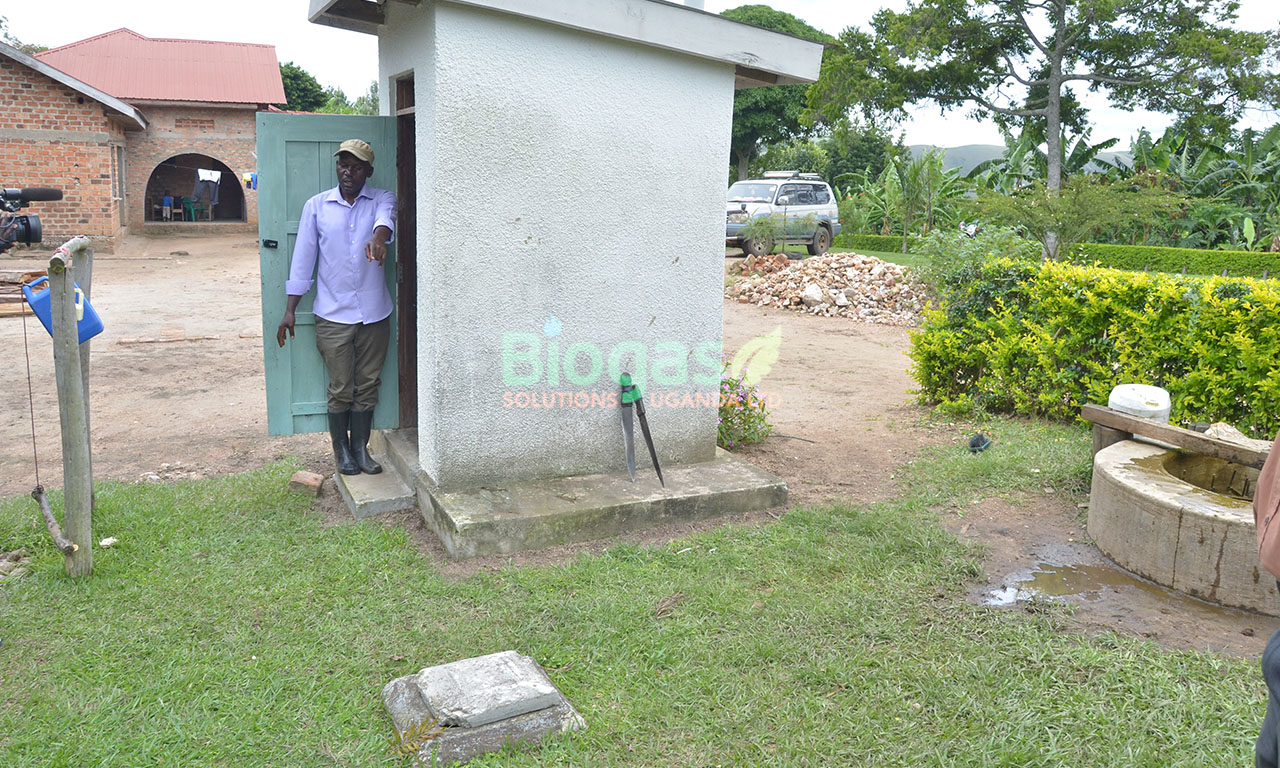
Biogas provides clean and smoke free cooking with less health risks like cancer, respiratory complications and eye problems related to use of firewood and charcoal. It also makes it easy in disposing of animal dung and urine. Installation of a bio toilet improves the sanitation of a home.

The value of bio-slurry is more than what we can imagine and in most cases; it’s the reason why others invest in a biogas plant. Bio slurry application increases yields to 30- 40%. In Uganda, Bio-slurry is used for a wide variety of purposes and in many different ways, ranging from organic fertilizers for vegetable, Bananas, coffee and other crops. It is also an insect repellant, stimulates algae growth in fishponds and is a chicken feed.
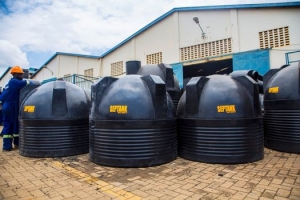
BSUL in collaboration with Crest Tank Limited to promote the plastic container type, called Blue Flame Bio Slurry Gas which is a floating dome type digester. These units are easy to fix and install, Installtion takes only one day. There are two types LFM 6200 Model and SHM 3300 Model.
Using the bio-slurry tank
- Collect 1,500kgs of cow dung and 1,500 litres of water or urine for the initial filling of the biogas unit. Then, mix the cow dung with the water or urine in a separate container beside the unit until it attains a porridge-like texture. After mixing, a the volume will be about 3,000 litres. Note that the amount of water or urine used depends on texture of the dung, therefore keep adding water or urine until the mixture is neither too thick nor too watery.
- Close the outlets of the digester and gas holder and then pour the mixture from the inlet on the side. There will be a discharge from the outlet on the opposite side once the digester is full to capacity. Then open the outlets for the air to exit from the gasholder completely. Close the outlets when the gasholder has descended.
- Leave the unit outdoors for 12 hours and the bacteria in the digester will start to work on the mixture. As it ferments, gas (methane) is produced and trapped in the gas holder. This will cause the gas holder to rise gradually until it covers 17 segments marked on the gas holder from the exterior. This should happen within 24hours or more, depending on the texture of the cow dung.
- Connect a burner or lamp from the outlet at the base of the digester to tap the gas, a blue flame will be emitted ready to be used for cooking and lighting on ignition. As you start using the gas, set more material to feed into the digester. Get 40 kg of dung and 40 litres of water and mix thoroughly and continue feeding as the gas begins to run out. Do not allow the mix simply to run out by fast feeding. Recommended feeding is 80-litre mixture for morning and evening.
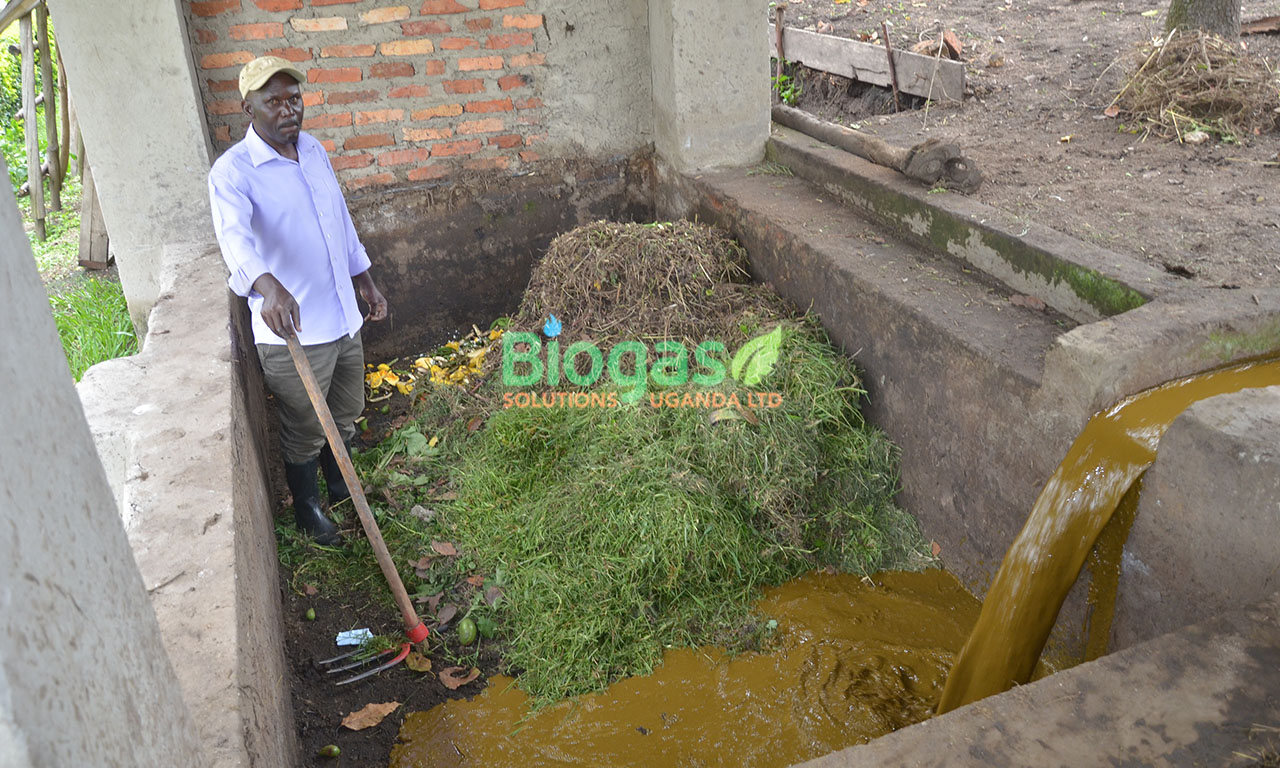
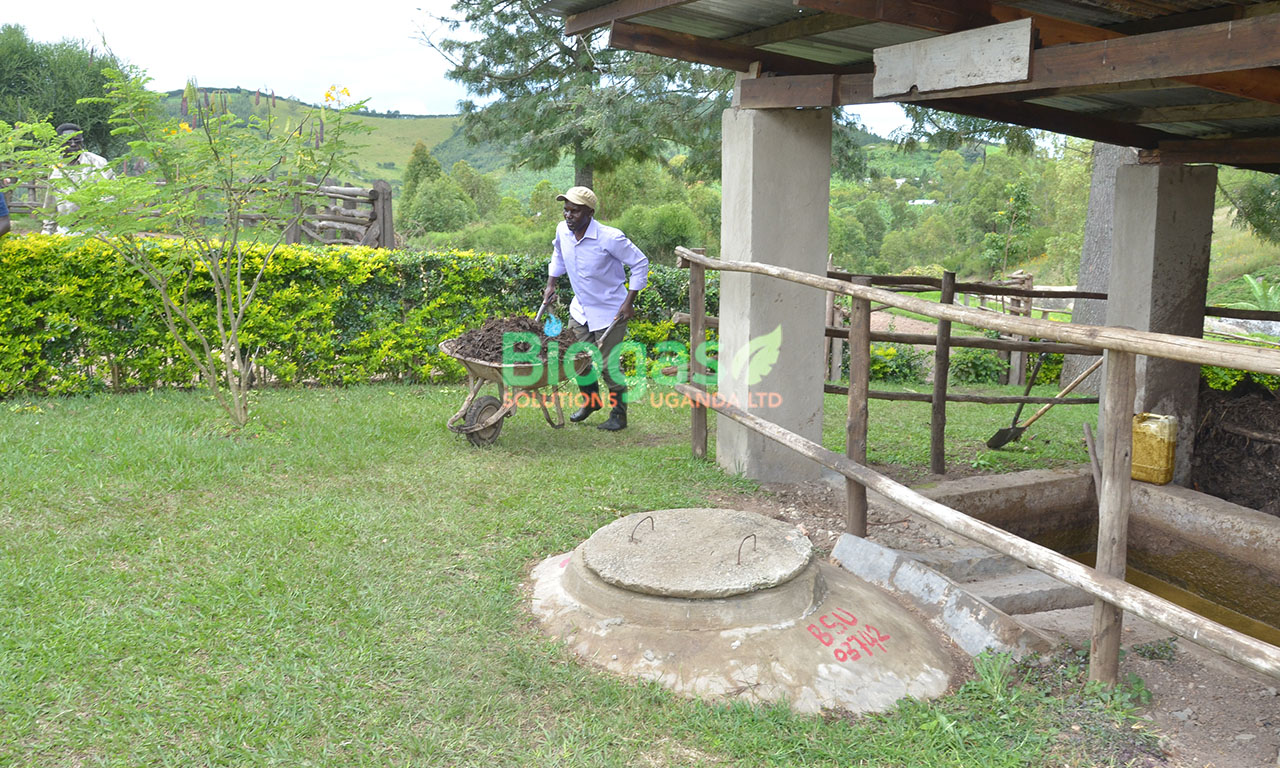
- As feeding is effected, say, 80 litres, it will emit 60 litres of the used cow dung-water/urine mixture from the outlet on the opposite side of the digester as bio-slurry (effluent) is released. Each time the unit is fed, it is rejuvenated hence the continued buildup of gas. The bio-slurry is used as a fertiliser in the garden to boost crop production or to be used as a food supplement for chicken, fish and pigs.
- Note that feed material can be any organic decomposing matter like animal dung, plant residue and sewage. Other than cow dung, droppings from other animals like pigs, goats and chicken can be used. Also, agricultural and food waste include over-ripe or rotten fruit pulps, crushed peelings or vegetables, spoilt fruit juice and vegetables from processing factories, finely crushed non-edible and wild fruits, sugarcane juice, finely chopped sugar cane and molasses, rotten or waste grain, bran of wheat, rice and other cereal, spoilt potatoes, cassava, sorghum, maize, millet, powdered oil cake from edible and non-edible oil seeds like cotton, castor and jatropha.
Caution: With agricultural waste and food remains, it is a two-stage process. The first stage being fermentation, which takes place in a separate vessel, and then the second stage will be feeding of the fermented mass into the digester. This is done to allow the anaerobic bacteria digest the waste.
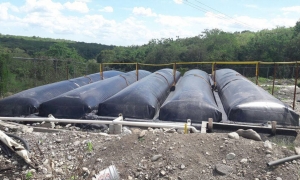
BSUL is working with international biogas companies to promote the Polythene type. The first technology promoted by Biogas International is FLEXI while, BIO-BOLSA is being promoted by Sistema Biogas. These are tested and approved systems working very well in Kenya and South Africa.
Flexi Biogas Solutions: The systems are fabricated from specially treated robust materials designed to withstand all weather conditions. The fabric is manufactured to last over ten years, and we further enhance its lifespan can be enhanced by applying a sunscreen UV block solution every seven years. We further enhance the lifespan by housing the system in a Micro-greenhouse tunnel that not only shields the digester against the harmful effects of direct solar UV rays, but also enhances and maintain high temperatures that increase the fermentation process and hence delivering unmatched efficiency and performance. The tunnel also shields the system from farm animals and critters such as children who believe the system is their personal bouncing castle
Sistema Biobolsa: A system that transforms the manure of animals into biogas and a potent, natural fertilizer. By inputting the manure in the system on a daily basis, you will be able to develop and grow your activities on the farm, improve your energy security, and protect the environment. Transforming your animals’ manure into resource will provide you with a better quality of life!


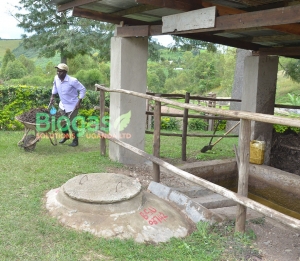
Developed in 2015 by BSUL and SNV together with Biogas experts in Uganda. It was developed from the MCD model with a main purpose to reduce setup and the area needed for installation. It is 20-25% cheaper than the MCD model.
Fixed Dome Camartec Design for domestic use
- Cubic Meter
This is a small capacity plant that requires 1.5 basins of cow dung per day. It will give the user approximately 2 hours of cooking and 4 hours of lighting based on one stove and one lamp. However you can get more cooking or lighting if not used simultaneously.
Suitable if user has 1 cow on zero grazing.
- 6 Cubic Meter
This is a small-medium capacity plant that requires 2.5 basins of cow dung per day. It will give the user approximately 4 hours of cooking and 4 hours of lighting based on one stove and one lamp. However you can get more cooking or lighting if not used simultaneously.
Suitable if user has 2 cows on zero grazing.
- 9 Cubic Meter
This is a medium capacity plant that requires 3.5 basins of cow dung per day. It will give the user approximately 6 hours of cooking and 5 hours of lighting based on two stoves and two lamps. However you can get more cooking or lighting if not used simultaneously.
Suitable if user has 2-3 cows on zero grazing.
- 13 Cubic Meter
This is a large capacity plant that requires 5.5 basins of cow dung per day. It will give the user approximately 7 hours of cooking and 5 hours of lighting based on two stoves and three lamps. However you can get more cooking or lighting if not used simultaneously.
Suitable if user has 4 or more cows.
2. Solid State Digesters (SSD)
This type of bio-digester is suitable for water stressed areas. It requires minimum water compared to the regular bio-digester and costs approximately 30% more. Sizes start at 9 cubic meters and above.


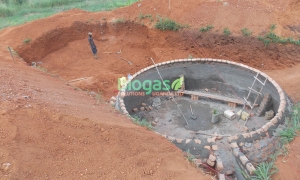
A model adopted from Tanzania, also a fixed dome type mainly promoted in the Phase 1 of the program. Recommended by ABPP for the introduction of Biogas in Uganda. The CAMARTEC Solid State – domestic biogas plants have been designed and modified by TDBP from the popular MCD to allow use of fresh undiluted cattle dung as substrate/feeding material that will suit the potential group of livestock keepers living in dry or semi arid areas.
Major modifications that have been incorporated in SSD are:
- Its large cylindrical inlet opening of 80 centimeters diameter instead of the current 10 centimeters diameter PVC inlet pipe which will
allow a stiff organic material to enter into the digester. - A separate cylindrical dung mixing chamber with a conical bottom of 90 centimeter diameter where removal of unwanted materials or
debris takes place. - Increased digestion volume via its deeper inlet and outlet openings and the conical shaped bottom of the digester that compensates for
the lost volume due to expected siltation. - Placement of the expansion chambers manhole directly on top of the slurry outlet opening to facilitate removal of inorganic solids
Literally under normal operations such biogas plants require very little or no water for mixing with cattle dung, and can generate about 50%
more biogas due to the fact that what influences the amount of gas production is the quantity of total organic solid contents (TSC) in the
mixture.
The total solid content (TSC) of the fresh cattle dung normally varies between 15–19%. If dung is thoroughly mixed with an equal quantity of water, a case with our popular MCD will produce a mixture with TSC of between 8–10%, and the digested slurry discharged from these biogas units is watery, containing up to 94–96% of water and the Total Solid Content 4–6%.
The slurry is spread on to the ground or collected into open slurry pits for drying, over a period of up to 45 days, to facilitate its transportation to the fields for use as manure. Like for the popular MCD, initial feeding has to start with a mixing ratio of dung to water/urine 1:1, and once a plant has started producing gas, the ratio/consistency can now be changed gradually, i.e. from 1:1, 3:1, 4: 1 and lastly undiluted fresh dung only without varying the amount of
fresh dung to be fed into the digester provided that slurry will be able to flow by itself in and out of the system.
Testing will be conducted in several phases, basing on the convenient consistency of the influent to determine the amount of gas production/day as well as the optimum hydraulic retention time which is also likely to prolong from i.e. 50 days to 100 days.