

adminbsul

Exciting Vacancy Announcement
BSUL IS HIRING
A Bio slurry and Extension Officer
Background:
Biogas Solutions Uganda Ltd (BSUL) is a private company limited by guarantee established in Uganda with the objective to formulate, develop and set in motion strategies, policies, plans, measures, systems and approaches that support private sector-led biogas sector development aimed at sustainable improvement of the livelihoods of rural and peri-urban households in Uganda. BSUL’s aim is to develop and nurture the biogas sector through dissemination of information to households, ensuring the quality of biogas plants and building capacities of various stakeholders in the biogas sector and ensure biodigester sustainability
Organizational context:
BSUL was established in 2014 under the framework of the Africa Biogas Partnership Program (ABPP) implemented in 5 African countries, namely Burkina Faso, Ethiopia, Kenya, Tanzania, and Uganda, funded by the Dutch Government. BSUL is currently the National Implementing Agency of the Africa Biodigester Component (ABC) 2022-2026 in collaboration with Uganda`s Ministry of Energy and Mineral Development as the line ministry, GIZ as the consortium partner leading interventions in the enabling environment and the Netherlands Development Organization (SNV) as the project Lead Implementer.
BSUL is looking for a suitable candidate to fill the position of Bioslurry and Extension Officer.
Job Title: Bioslurry and Extension Officer.
Contract duration: 11 months
2.0 Duties/Responsibilities of the “Bio slurry and Extension Officer”:
- Develop and implement the bioslurry business case in Uganda, fostering growth and sustainability.
- Design and facilitate training programs for Business Enterprises (BEs).
- Identify and onboard new farmers and organizations to expand the bioslurry business case.
- Conduct continuous research to gain a comprehensive understanding of the fertilizer industry in Uganda, with a focus on organic fertilizers.
- Lead marketing and sales initiatives to promote bioslurry as an organic fertilizer, including the implementation of effective marketing strategies.
- Identify and establish strategic partnerships with value chains, cooperatives, and other relevant organizations to support the business case.
- Establish demos and use them as training centres as you provide business advisory services to value chains, farmers and BEs to enhance their understanding and application of bioslurry.
- Build the capacity of partner organizations and local extension officers in bioslurry-related skills and knowledge.
- Support the growth of existing business cases and ensure the management of all bioslurry opportunities.
- Monitor and address farmer complaints, liaising with BSUL for further action as needed.
- Participate in farmer field days, exhibitions, and annual general meetings (AGMs) to promote awareness and adoption of bioslurry.
- Prepare and submit timely, accurate reports, including work plans and periodic updates (weekly, monthly, quarterly, and annual).
- Undertake other priority assignments as required.
Required skills and Experiences:
- A university degree in any Agriculture related course.
- Relevant working experience: 3 to 5 years working with communities in Agriculture, energy, environment, private sector development. Sales and marketing, in rural communities, is an added advantage but not a perquisite.
- Experience in project implementation and working in teams.
- Excellent English and knowledge of local languages an asset.
- Experience in Agriculture Extension and Training
- Relationships with large agriculture cooperatives, districts and/or financial institutions
is a plus.
- Good interpersonal skills (tact, diplomacy, discretion and impartiality) are essential for this position,
- Strong team-player with ability to work in virtual teams
- Ability to work and communicate effectively with a broad spectrum of individuals and within a broad range of cultural environments
- High level of good organizational and computer skills with an ability to work well under pressure,
- Must be committed to equal opportunity employment policies,
- Adheres to BSUL’s values
- Demonstrates BSUL behaviours in way of working
- Willingness to intensively travel in the area of operation.
- Valid motorcycle permit.
Working Relationships
Internal: Interacts and works closely and on a regular basis with the Managers, Programme team and office staff.
External: Interacts as required with other stakeholders, in collaboration with the Project Executants as appropriate.
Additional Information:
Please send your application, CV and credentials as one PDF document on email to This email address is being protected from spambots. You need JavaScript enabled to view it.
The Deadline for application is Thursday, 30th January 2026
Only shortlisted candidates will be contacted.

Exciting Vacancy Announcement
BSUL IS HIRING
A FINANCE AND ADMINISTRATION ASSISTANT
Background:
Biogas Solutions Uganda Ltd (BSUL) is a private company limited by guarantee established in Uganda with the objective to formulate, develop and set in motion strategies, policies, plans, measures, systems and approaches that support private sector-led biogas sector development aimed at sustainable improvement of the livelihoods of rural and peri-urban households in Uganda. BSUL’s aim is to develop and nurture the biogas sector through dissemination of information to households, ensuring the quality of biogas plants and building capacities of various stakeholders in the biogas sector.
Organizational context:
BSUL was established in 2014 under the framework of the Africa Biogas Partnership Program (ABPP) implemented in 5 African countries, namely Burkina Faso, Ethiopia, Kenya, Tanzania, and Uganda, funded by the Dutch Government. BSUL is currently the National Implementing Agency of the Africa Biodigester Component (ABC) 2022-2026 in collaboration with Uganda`s Ministry of Energy and Mineral Development as the line ministry, GIZ as the consortium partner leading interventions in the enabling environment and the Netherlands Development Organization (SNV) as the project Lead Implementer. BSUL is looking for a suitable candidate to fill the position of Finance and Administration Assistant.
Job Title: Finance and Administration Assistant.
Contract duration: 11 months
Duties and responsibilities:
The Finance and Administration Assistant will work closely with the BSUL team. He/she will directly report to the Finance and Administration Manager. He/She will have the following responsibilities;
- Finance and accounting roles
- Management of stores and Inventory
- Prepare and organize all logistics for local workshops of BSUL, coordinate all travel vehicles for staff and administrative roles
- Procurement support, Invoice processing and Expense tracking as per budgets
- Assistance in budgeting development process
- Audit support both internal and external
- Undertaking any other duties assigned by other supervisors
Required skills and Experiences:
- At least 3 years’ experience in accounting and finance in the field of international NGO ́s or private sector.
- A university degree in Commerce, Accounting or Finance. CPA level II will be an added advantage.
- Demonstrable skills in the development of finance and accounting policies, procedures and systems in the context of an international NGO and private sector,
- Good knowledge of fund accounting and private sector including reporting requirements of multiple donors
- Hands-on knowledge of the accounting software and excel would be a distinct advantage,
- Excellent English and knowledge of local languages an asset.
- Required Skills and competences:
- Good interpersonal skills (tact, diplomacy, discretion and impartiality) are essential for this position,
- Strong team-player with ability to work in virtual teams
- Ability to work and communicate effectively with a broad spectrum of individuals
- within a broad range of cultural environments
- High level of good organizational and administrative skills with an ability to work well under pressure,
- Must be committed to equal opportunity employment policies,
- Adheres to BSUL’s values
- Demonstrates BSUL behaviours in way of working
Working Relationships
Internal: Interacts and works closely and on a regular basis with the Managers, Programme team and office staff.
External: Interacts as required with other stakeholders, in collaboration with the Project Executants as appropriate.
Additional Information:
Please send your application, CV and credentials as one PDF document on email to This email address is being protected from spambots. You need JavaScript enabled to view it. and A copy to This email address is being protected from spambots. You need JavaScript enabled to view it.
The Deadline for application is Thursday, 30th January 2026
Only shortlisted candidates will be contacted.

BSUL IS HIRING
A MARKETING OFFICER- ELECTRIC PRESSURE COOKER (EPC) PROJECT
REPORTS TO: BUSINESS DEVELOPMENT AND MARKETING MANAGER.
Job Summary:
The Marketing Officer will work closely with and under the guidance and supervision of BSUL team and will manage the day-to-day activities of the EPC project, develop and implement strategies that will ensure achievement of set targets on sales of EPCs within the selected districts of Uganda, recruit and manage commission agents and drive awareness through practical demonstrations and circulation of IEC materials. She/he will support the biogas program activities as may be required.
Job Description
The Marketing Officer is responsible for the daily management of the EPC project, sales and marketing strategy development and implementation, designing clear route to market plan, recruitment, training and managing commission agents , planning distribution channels, stock planning, quality checks with a clear customer service plan, gender inclusion, monthly reporting and the overall operations of the EPC Project with flexibility to support the biogas activities through Business development and marketing function.
Professional Qualifications, Experience, and Characteristics
- Relevant degree in; Business, Economics, or equivalent.
- Relevant working experience: 2 to 5 years working with communities and strong in selling.
- Working experience in the regional and target environment., in energy is an added advantage
- Willingness to travel, as may be needed
How to Apply
If you think, you are the candidate we are looking for, please send in your application, CV, Letter of motivation and names and contacts of two professional referees to This email address is being protected from spambots. You need JavaScript enabled to view it. before 30th January 2026 with reference: BSUL- MO in the subject line.
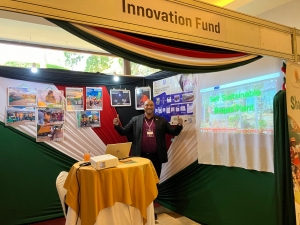

Energising Healthcare 2025 was a well organized event highlighting the need for new ideas in innovation, financing and rapid action in delivering essential healthcare services to the over 1 billion people that lack access to modern healthcare.
BSUL is proud to contribute to this goal by developing innovations in biogas technology in Uganda to provide sustainable electrification in humanitarian settings. Biogas technology offers the additional advantages of improving waste management, creating local employment and climate change mitigation.
Thanks to UKAID/Transforming Energy Access (TEA) and Sustainable Energy for All (SEforALL) for supporting transformative initiatives with the Innovation Fund.

Exciting Vacancy Announcement
Background:
Biogas Solutions Uganda Ltd (BSUL) is a private company limited by guarantee established in Uganda with the objective to formulate, develop and set in motion strategies, policies, plans, measures, systems and approaches that support private sector-led biogas sector development aimed at sustainable improvement of the livelihoods of rural and peri-urban households in Uganda. BSUL’s aim is to develop and nurture the biogas sector through dissemination of information to households, ensuring the quality of biogas plants and building capacities of various stakeholders in the biogas sector.
Organizational context:
BSUL was established in 2014 under the framework of the Africa Biogas Partnership Program (ABPP) implemented in 5 African countries, namely Burkina Faso, Ethiopia, Kenya, Tanzania, and Uganda, funded by the Dutch Government. BSUL is currently the National Implementing Agency of the Africa Biodigester Component (ABC) 2022-2025 in collaboration with Uganda`s Ministry of Energy and Mineral Development as the line ministry, GIZ as the consortium partner leading interventions in the enabling environment and the Netherlands Development Organization (SNV) as the project Lead Implementer. BSUL is looking for two suitable candidates to fill the position of Monitoring and Evaluation/Quality control (M&E/QC) graduate Intern.
Job Title: M&E/QC graduate Intern.
Contract duration: 3 months
Duties and responsibilities:
The M&E/QC graduate Intern will have the following responsibilities;
· Making regular telephone calls to clients listed in BSUL's database and complaint tracker to assess the operational status of their biogas plants.
· Updating the database and complaint tracker with the current functionality status of each plant, ensuring accurate and timely records.
· Preparing a weekly report that summarizes the number of clients contacted, any issues or concerns that have been discovered, and an overall snapshot of the biogas plant's performance.
· Performing any additional tasks as assigned
Qualifications
· A bachelor's degree in any field is acceptable, although a background in computer-related fields is highly advantageous.
· Knowledge in Microsoft office (Ms word and especially Excel)
· Ability to speak different languages
Requirements
· Staying near Bugolobi is an added advantage
· Possession of a laptop is a MUST
· Possession of a mobile phone with 2 lines (MTN & AIRTEL)
Please send your application, CV and credentials as one PDF document on email to This email address is being protected from spambots. You need JavaScript enabled to view it.
The Deadline for application is Friday, 7th February 2025. Only shortlisted candidates will be contacted.

Biogas is used as a cheaper clean cooking alternative source of energy for your family. It cooks faster and is very reliable with no soot on your sauce pan or kettle. The use of biogas is estimated to reduce the daily time required to prepare food by 40%. The time saved can be utilized constructively on income generating ventures.
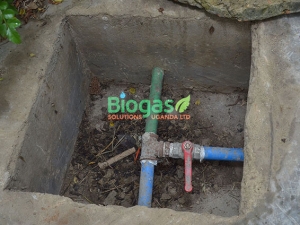
It is very expensive for an ordinary Ugandan to afford the establishment of a biogas plant. Government has been asked to create a special fund, to help in lowering the cost of production for biogas energy in Uganda.Speaking during a clean cooking baraza in Kampala, a platform for sharing ideas and discussions around Uganda’s clean cooking sector, by the Uganda National Alliance on Clean Cooking (UNACC), Eng. Christopher Kato an a expert on biogas manufacturing, said the fund will lower the cost of production, and increase the production of biogas energy.
“If government funds the production of biogas energy, we are likely to see an increase in production of gas, and also job creation for the local people as well as protection of the environment,” Kato said. According to Kato, it is very expensive for an ordinary Ugandan, to afford the establishment of a biogas plant, adding that for one to construct a digester which is very key in biogas production, needs to part with sh2m which is considered high for low income earners.He noted that there is a high demand for cleaner and readily available energy from biogas, but the cost associated with the establishment of biogas energy digester, has kept the production of gas very low.
“I would want to appeal to the government, to ensure that it makes the cost for acquiring the digester cheaper, this will help us save the environment and also create more jobs for our people,” Kato added.In its 2008 state of the environment report, the National Environment Management Authority (NEMA, showed that the country was losing 90,000 hectares annually. Statistics by ministry of water and environment indicate that Uganda loses 120,000 hectares of forest cover each year, to meet the demands for cooking and small scale industries.However according to Kato, with high production of biogas energy by Ugandans, the country is likely to have reduced use of firewood for cooking. In his remarks, Anthony Okello, from SNV, a Netherlands non-government organization urged Ugandans to embrace biogas, to save their lives as well as the environment.
“In 2007, we carried out a survey, which revealed that that at least 2000 households in Uganda, have materials such as cow dung, which can be used for biogas making,” Michael Ahimbisibwe, an official from the ministry of energy said. The World Health Organization (WHO, estimates that 4.3 million people die every year from diseases such as lung cancer, cardiovascular diseases pneumonia among other diseases due to using unclean energy which emits smoke.Out of these deaths, Uganda contributes 18,250 deaths annually.
- See more at: http://www.newvision.co.ug/new_vision/news/1433119/govt-create-fund-production-biogas#sthash.MuYUePmQ.dpuf
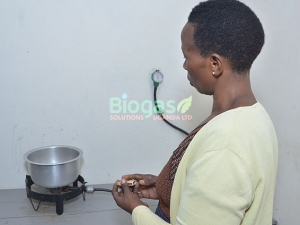
Demand for wood fuel for energy use has resulted in trees being cut for wood and charcoal, which has had damaging effects on the environment. Smoke from burning of fuel wood is a hazard to human health and, in addition, the cost of domestic fuel is high.
Therefore, biogas is considered an inexpensive alternative source of energy for cooking and lighting. It is being promoted by different agencies in different parts of the country, especially in the rural areas. Uganda Domestic Biogas Programme aims to address the gap by developing and disseminating biogas technologies in rural and semi-urban areas.
In this, they highlight the benefits of clean biogas for cooking and lighting and using the bio-slurry, the by-product, to increase agricultural yields. When any organic matter, such as cow dung, crop residue and chicken wastes, is fermented in the absence of oxygen, biogas is generated. Biogas contains flammable methane amounting about 60-70 per cent along with carbon dioxide comprising 30-40 per cent, and traces of other gases.
Biogas is colourless and odourless. It is an ideal fuel for a variety of applications such as cooking, lighting and motive power. The waste from the biogas plant after the gas is produced is an excellent organic manure that improves soil fertility. In addition, biogas offers a number of direct and indirect benefits. For the environment, the trees that would be used as fuel wood can be saved.
Clean energy
There is also improved health arising from avoidance of smoke, which would have been the case with the other forms of cooking. It also saves time, among others. One of the several initiatives to promote biogas is that being carried out by Agricultural Engineering and Appropriate Technology Research Institute, Namalere (AEATRI).
George Walozi, research officer in charge of energy engineering, AEATRI, explains the programme involves fabricating equipment, which can be used for renewable energy including farm power machinery. His team is engaged with farmer groups and other communities in Jinja, Mbale, Soroti Kabale, Mbarara, Masindi, Arua, Mpigi and Masaka, among others.
The communities get to know about the energy project through exhibitions, which the team conducts at different events organised by National Agricultural Research Organisation (Naro). Apart from biogas produced from cow dung, they also sensitise communities about wind energy. AEATRI makes wind pumps to draw water from underground for irrigation of crops as well as for animals to drink. Fish farmers can also use wind pumps in the fish ponds although that is still at the research stage.
For biomass usage, communities are encouraged to use crop residues as well as animal waste. The objective is to reduce cutting of trees for charcoal, a major source of energy in the country. A case study was carried out in Kawempe Division in Kampala, where farmers keeping cattle under zero-grazing were trained to make biogas from cow dung. It was funded by France through Makerere University.
George Makumbi, research assistant, AEATRI's water harvesting and storage programme, explains the Institute came on board for construction of the biogas plants in their homes. The project focused on urban dwellers to show how waste from zero-grazing cattle can be utilised for biogas. The team ensured the animals must be kept under zero-grazing as one of the conditions.
How to make biogas
When mixing the cow dung with water, the ratio should be one to one. Thereafter, the mix is directed to the digester. As pressure builds up, which is caused by bacterial action, biogas is produced. This is directed by a pipe constructed from the outlet to where it is needed.
The scientists emphasise that the cow dung used for producing this gas should be "pure". It can be mixed with urine but no stones or other substances. This may cause yellow flame instead of the blue flame, which is best for cooking. When mixing cow dung with water, use a strainer before it is let into the digester.
The digester is constructed using concrete material but smooth clay is smeared at the outlet, which is kept moist to avoid any cracks. In case of any leakage, the digester, which is four metres wide, has to be mended. After digesting these materials for the gas to escape through the pipe, the remaining waste is kept in the expansion chamber. It is later used as fertiliser.
'I invested in biogas'
I am John Sserwada, 65, and I am part of a group of over 20 farmers in Kazo village, Kawempe, who were trained by AEATRI Namalere in biogas produced from cow dung. I was part of this initiative because I had three cows under zero-grazing, mainly for milk for my family. I also have a farm in Luweero where I grow cassava, banana, beans.
I use fertiliser that I get from the biogas plant that is on the farm. If there is an excess, I sell it to other farmers. I invested about Shs10m, which I do not regret because I save a lot in terms of charcoal use and firewood.
I used to use five bags of charcoal, which now has reduced to one in a month. I am saving about 80 per cent in terms of purchasing charcoal. I am not using biogas for lighting yet because I need to purchase the necessary requirements. The beauty of using biogas is that it is environmentally friendly.
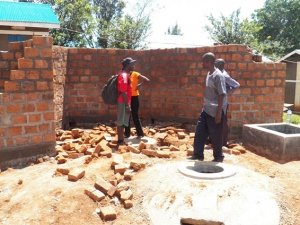
One of the major drawbacks faced by school managers in Uganda are the high administrative costs such as electricity and fire wood bills, among others. There have always been press reports about some schools closing for holidays before the official Education ministry date or suspending meals due to budgetary constraints.
David Ssemwogerere, the director of Suubi Secondary and Vocational College in Lwengo District, agrees that the cost of living has risen and there are financial constraints in nearly all educational institutions.
“However, as school administrators and proprietors, we have a duty to provide and make education affordable. It is the reason we accept items such as eggs as a form of school fees payment at Suubi. We also train students in farming skills and where possible help them to acquire animals such as pigs and poultry. That way, they can sell eggs, piglets, or some vegetables and fruits to contribute towards their educational costs,” he said.
Exploring alternative energy
Ssemwogerere adds that one of the worries for many schools is the high cost of firewood for cooking school meals and electricity for lighting. A big number of education institutions in the country use hydroelectricity yet there are alternative cheaper sources of energy such as solar and biogas.
“We use our school pit latrine to produce biogas for lighting and cooking,” he says adding that latrines which are common in many schools and homes in Uganda can be a good source of clean energy for both lighting and cooking.
Grooming students
The head teacher of Suubi Secondary and Vocational College, Robert Walugembe, revealed that they use biogas to train students to be conscious of cheaper and readily available sources of energy in nearly all rural areas in Uganda.
“Once they have seen that it is possible to use biogas from their latrines for lighting and cooking here at the school, they will be less likely to depend on firewood for their cooking needs at home,” he said. “We also expect that they will not cling to paraffin both for cooking and lighting.”
In cases where schools are not yet in position to use biogas for cooking, Ssemwogerere advises that they should construct fuel saving cook stoves that minimise charcoal and firewood consumption.
Enhancing farming
“We have more than 200 goats as a source of income to cushion us against sudden financial needs. We sell their droppings to farmers in the local community but we also use some of it as manure to grow vegetables in the school garden. These are all agricultural skills that our students can pick for future use in their homes,” Ssemwogerere says.
Jennifer Nassozi, a resident in Kalegero village said, “Suubi is helping parents to acquire new knowledge because we actually share the practical agricultural skills that our children get at the school. They ultimately help us to pay school fees and to meet other costs.” With a number of skills taught, coupled with measures put in place to reduce spending, schools look to spending panic-free academic terms.
Giving skills training
Aside from classwork students at Suubi are given skills such as tailoring, weaving, carpentry and welding, among others. “They make school uniforms and the sweaters and for every item a student earns a fraction of the profit obtained after it has been sold going towards payment of their tuition fees. For example, we recently put up a dormitory and our students did most of the practical work – making the doors and windows,” David Ssemwogerere, the director of Suubi Secondary and Vocational College, said.
Making the biogas
According to Wikipedia, biogas is produced by the breakdown of organic matter in the absence of oxygen. It can be produced from raw materials such as agricultural waste, animal dung, sewage, and rotting plant material. The organic waste is placed in a container connected to pipes that leads the gas wherever it is to be used -to the kitchen for cooking or to the lamps for lighting. A biogas system should be installed by a qualified person. If it is poorly installed it can cause explosions and house fires.
Article Courtesy of Daily Monitor, By Michael J. Ssali. Published Tuesday July 25 2017

The gas is used for lighting as well. Use of Biogas in our homes reduces the use of paraffin lanterns, which are the number one cause of domestic fires. It also lets your child study at night with safe lighting.